Notre Réseau Mondial d'Amis et de Partenaires
Parce que le voyage est toujours plus beau lorsqu'il est partagé.
Si vous travaillez, promouvez et défendez la diversité monétaire et que nous ne nous connaissons pas encore.
Il est donc grand temps d'agir !
MoDi est un réseau horizontal, organique et gratuit. Participer à MoDi ne signifie pas adhérer à ses points de vue et opinions.
Ce réseau met avant tout en lumière la profondeur et la diversité des organisations qui œuvrent pour un monde meilleur grâce à la question de l'argent.
Découvrez nos Amis & Partenaires
Un réseau mondial engagé à transformer l'économie
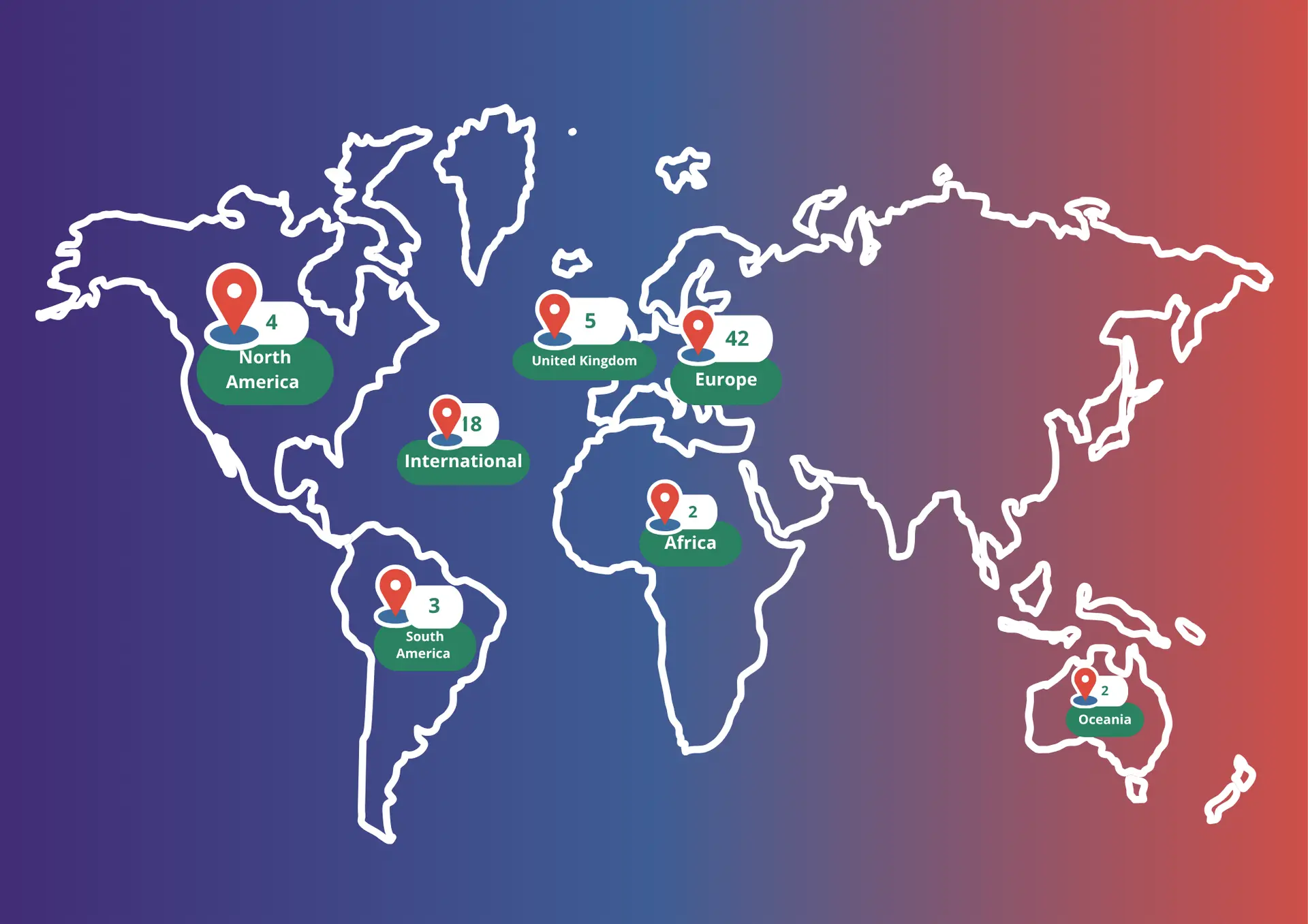
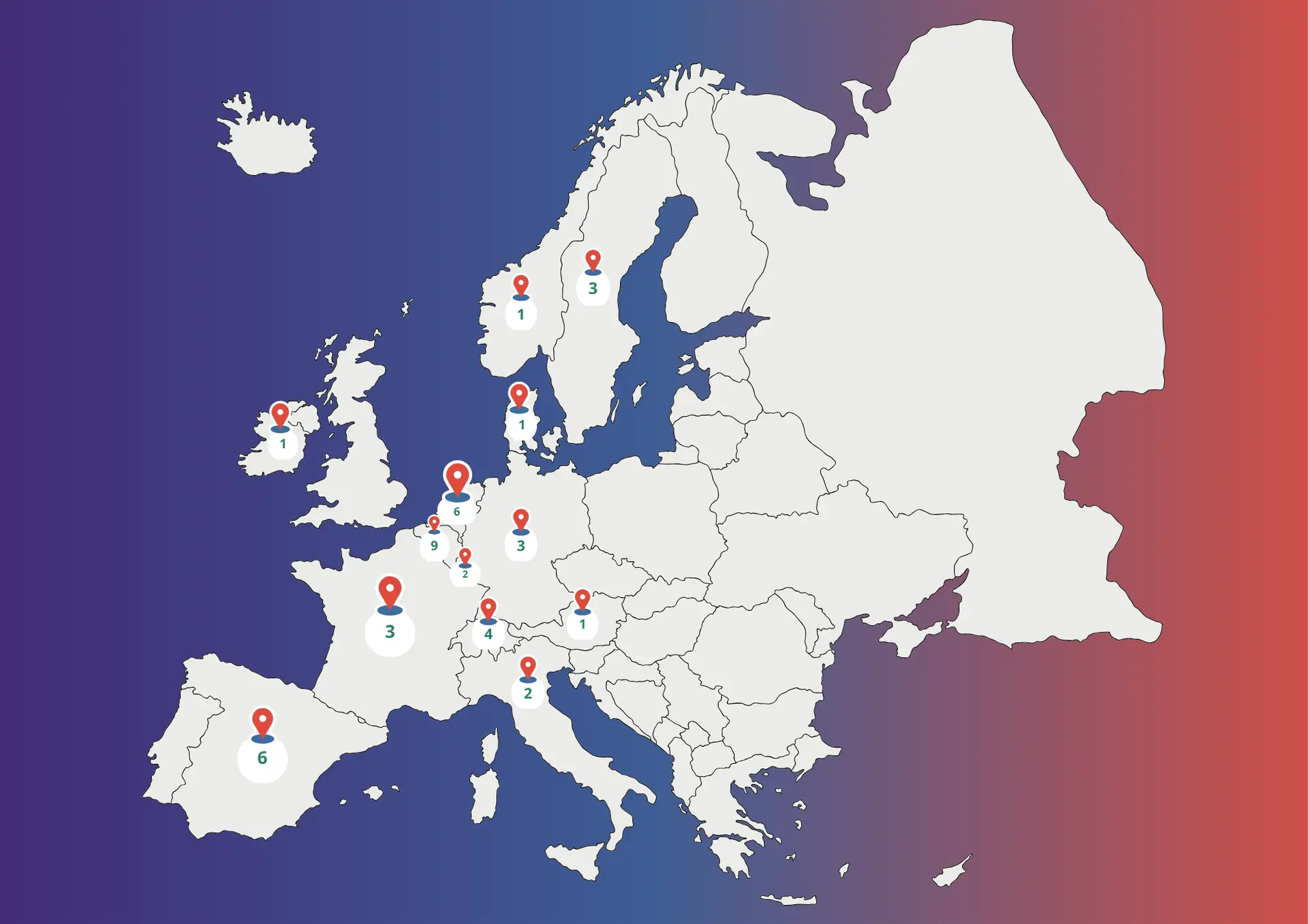
MoDi contribue à tisser un écosystème unique regroupant aujourd'hui plus de 60 organisations partenaires (et ce nombre ne cesse d'augmenter) dans plus de 27 pays. De la Belgique au Kenya, de la Norvège à l'Espagne, ces acteurs innovants incarnent une riche diversité d'approches complémentaires autour des monnaies alternatives, du crédit mutuel et de la justice économique. Ensemble, ils forment un mouvement international animé par des valeurs communes : la coopération, la résilience et la durabilité.
N'hésitez pas à les contacter, ils en savent plus que nous !
Royaume-Unis
Credit Commons Society propose des solutions de liquidité permettant aux entreprises et aux collectivités de commercer sans recourir à la monnaie traditionnelle. En mettant en place des systèmes de crédit mutuel, elle favorise des réseaux financiers décentralisés, sans intérêt et coopératifs.
MoDi s'efforce activement de faire comprendre et accéder à ces technologies et à leurs conséquences sociales sous-jacentes auprès du plus grand nombre.
En savoir plus: https://www.mutualcredit.services/home
Genève, Suisse
Rassemblant des entreprises, des organisations et des individus engagés en faveur de la finance éthique, de la consommation responsable et de la justice sociale, APRÈS-GE favorise la collaboration et l'innovation. Grâce à l'advocacy, au partage de connaissances et au réseautage, elle stimule le développement de modèles économiques basés sur la solidarité qui privilégient le bien-être collectif par rapport à la maximisation des profits..
Avec une expertise approfondie dans l'économie sociale et les alternatives monétaires, APRÈS-GE offre un espace unique pour repenser les systèmes économiques et soutenir des initiatives impactantes.
Plus d'infos: www.apres-ge.ch.
International
L'Association des Crypto Commons (CCA) est une organisation à but non lucratif dédiée à favoriser le développement des infrastructures des Crypto Commons. Grâce à la recherche, à la création de contenu, aux cours et aux événements, la CCA fait progresser la conversation sur des modèles économiques décentralisés, durables et coopératifs.
Hébergé sur OpenCollective, le CCA réunit des experts, des chercheurs et des praticiens engagés à repenser les systèmes numériques et monétaires pour le bien commun.
Cette année, la communauté se réunit en Autriche, offrant un espace unique pour la collaboration, l'échange de connaissances et l'exploration de nouveaux modèles pour une économie numérique plus juste..
En savoir plus: https: //www.crypto-commons.org/

Utrecht, Pays-Bas
Dans un monde où l'inclusion financière est plus importante que jamais, Cyclos propose une solution puissante et flexible pour les monnaies communautaires, les plateformes de paiement et la banque numérique.
Utilisé par des institutions financières, des gouvernements locaux et des initiatives communautaires dans le monde entier, Cyclos permet la création de systèmes de paiement personnalisés, allant des portefeuilles numériques aux réseaux de prêt entre particuliers.
Avec un fort accent sur l'accessibilité et l'adaptabilité, Cyclos permet aux communautés et aux organisations de développer des écosystèmes financiers alternatifs qui répondent à de réels besoins économiques.
En savoir plus: www.cyclos.org
France
Cylaos : Solutions de paiement positives pour une économie locale et sociale.
Dans un monde où l'impact social et local est primordial, Cylaos accompagne les entreprises et les communautés dans la mise en œuvre de plateformes de paiement à vocation sociale.
Qu’il s’agisse de monnaies locales, de bons d’achat, de programmes d’aide ou de crédit mutuel, nos solutions sont conçues pour favoriser une économie plus inclusive et durable.
Grâce à notre expertise en solutions de paiement positives, nous aidons nos partenaires à créer des écosystèmes financiers innovants, adaptés aux besoins des communautés et des acteurs de l'économie sociale.
Plus de solutions: www.cylaos.com
Genève, Suisse
Monnaie Léman : une monnaie locale pour une économie durable.
Le léman est une monnaie complémentaire destinée à renforcer l'économie locale de la région genevoise et franco-suisse. En encourageant les transactions au sein du réseau local, il favorise le développement durable, les circuits courts et la cohésion sociale.
Les entreprises et les particuliers utilisant le Léman contribuent à une économie plus résiliente et éthique, réduisant ainsi la dépendance aux fluctuations financières mondiales tout en favorisant la prospérité régionale.
Découvrir Le Leman: www.monnaie-leman.org
International
Systèmes informels : Construire une infrastructure financière fiable et transparente.
Informal Systems est une société de recherche et développement spécialisée dans les systèmes distribués, la blockchain et la vérification formelle. Fortement engagée en faveur de la transparence financière et de la décentralisation, Informal Systems développe des infrastructures économiques sécurisées, vérifiables et résilientes.
En tant que contributeur majeur à Cosmos et Tendermint, Informal Systems joue un rôle clé dans le développement de réseaux blockchain interopérables. Ses travaux en matière de vérification formelle garantissent la fiabilité des systèmes décentralisés, renforçant ainsi la confiance dans les technologies financières de nouvelle génération.
Plus d'infos: https://informal.systems/
Bavière Allemagne
Le chiemgauer est une monnaie locale introduite en 2003 en Bavière, en Allemagne, afin de soutenir le commerce local, les pratiques durables et les projets communautaires. Son système repose sur l'oxydation de la monnaie : les billets perdent de la valeur au fil du temps pour favoriser leur circulation. Le chiemgauer contribue à la croissance économique régionale, au développement durable et à la solidarité sociale en renforçant les liens entre les consommateurs, les commerces et les associations locales. Les consommateurs peuvent échanger des euros contre des chiemgauers, acceptés par les commerces participants.
L'une des principales monnaies complémentaires en Europe, le Chiemgauer a inspiré des centaines de CC et est resté un phare d'espoir et de longévité pour l'ensemble du secteur.
Explorez leur site Chiemgauer website.

Pays-Bas
STRO se distingue comme une organisation pionnière qui s'engage à créer des alternatives aux systèmes monétaires et économiques existants. STRO vise à bâtir un monde riche en opportunités de développement, en niveaux de vie élevés et en diversité culturelle, tout en soulignant l'importance de protéger la diversité environnementale grâce à des pratiques de production et de consommation durables.
Ils étaient présents quand (presque) personne d'autre ne l'était. STRO a été pionnière dans le développement des monnaies locales à l'échelle mondiale. MoDi est très fière de compter des partenaires aussi solides au sein de son réseau.
En savoir plus https://socialtrade.nl/
International
AZKR construit un écosystème décentralisé reliant le Web2 et le Web3 afin de simplifier les transactions crypto et de faciliter l'adoption des DAO. Son innovation phare, Bank3, permet aux utilisateurs d'envoyer des cryptomonnaies directement par e-mail ou sur leurs réseaux sociaux, s'affranchissant ainsi des adresses de portefeuille. L'infrastructure de la League of Identity (LoID) garantit la sécurité et la confidentialité tout en favorisant l'adoption des cryptomonnaies par le grand public. La vision d'AZKR est de rendre la technologie blockchain plus accessible et conviviale pour les transactions financières.
Considérer la monnaie à travers sa structure institutionnelle implique d'examiner comment se déroule la prise de décision lorsqu'il s'agit d'orienter les actions et les politiques monétaires.
En savoir plus AZKR.

Pays-Bas
United Economy est une initiative qui promeut une économie durable, locale et équitable en connectant les entreprises et les individus. Elle facilite des choix de consommation conscients, favorisant des collaborations pour accélérer les transitions économiques. Les membres peuvent participer à des achats groupés, au commerce durable et à des pratiques commerciales circulaires. Le réseau comprend plus de 600 entreprises et 1 100 individus engagés à avoir un impact positif sur la société et l'environnement..
MoDi est fier de s'associer à l'un des plus grands réseaux dans le domaine des monnaies complémentaires. L'initiative néerlandaise a été à l'avant-garde du développement dans le monde des CC pendant plus d'une décennie et reste une source d'inspiration pour d'autres..
Rejoindre le mouvement United Economy.

Royaume-Unis
Local Loop Merseyside est une initiative communautaire qui promeut l'économie circulaire en favorisant la circulation locale des ressources. Grâce au troc, aux échanges locaux et aux systèmes de crédit mutuel, elle aide les entreprises et les particuliers à réduire leurs déchets, à optimiser l'utilisation des ressources et à bâtir une économie locale résiliente.
En favorisant la coopération et la durabilité, Local Loop Merseyside permet aux communautés de devenir moins dépendantes des marchés externes tout en créant des liens économiques plus forts.
Sous l'impulsion de nos amis Dil et Tom, Local Loop est le meilleur exemple d'adoption d'un mécanisme moderne de crédit mutuel et d'apurement de dettes. L'ensemble du secteur bénéficie de leur travail novateur et de leur expertise, tout comme MoDi.
En savoir plus: www.localloop-merseyside.co.uk
Belgique
Merciki est la plateforme d'échange solidaire en ligne qui fait des économies. Merciki est une monnaie complémentaire conçue pour favoriser les échanges locaux et renforcer l'économie solidaire en Belgique. En encourageant la circulation de la valeur au sein des communautés, Merciki soutient la consommation durable, la cohésion sociale et la résilience économique. Grâce à son système de crédit mutuel, Merciki permet aux particuliers et aux entreprises d'échanger des biens et des services sans recourir à la monnaie traditionnelle, promouvant ainsi une économie plus inclusive et coopérative.
Initiative pionnière en Belgique, le token de gratitude, déjà présent ailleurs, est désormais disponible en récompense sur « Merci ». Le travail de Johan et de son équipe a considérablement enrichi le réseau, démontrant la grande variété d'outils utiles à la population.
En savoir plus www.merciki.be

Spain
Observatorio de la Moneda Complementaria: Understanding and promoting alternative currencies. The Observatorio de la Moneda Complementaria is a platform dedicated to researching, documenting, and supporting complementary currencies worldwide. By analyzing their impact on local economies, social inclusion, and sustainability, the observatory provides valuable insights for communities and policymakers.
MoDi is proud to partner with this dynamic network facilitating learning and scaling of complementary currency in Spain. The Observatory has already proved a significant and worthwhile actor in the field of complementary currency with values.
Explore the platform: https://observatoriomc.glide.page/dl/16a409
Spain
Grama Moneda is a local currency initiative in Santa Coloma de Gramenet, Spain, aimed at strengthening the local economy by promoting transactions within the community. It encourages businesses, cooperatives, and individuals to use Grama for everyday purchases, fostering social cohesion and sustainability. The platform offers a secure digital payment system through an app, making it easy for users to participate and support local commerce.
Find out more on the Grama Moneda website.

International
RAMICS (Research Association on Monetary Innovation and Community and Complementary Currency Systems) is an international academic network focused on the study of alternative monetary systems. It explores community currencies, historical money systems, cryptographic currencies, and other financial innovations that promote economic diversity, social cohesion, and sustainability. The organization connects researchers, students, and practitioners through publications, conferences, and collaborative initiatives.
Learn more: RAMICS
International
The International Journal of Community Currency Research (IJCCR) is a global open-access journal dedicated to the study of community and complementary currencies. Founded in 1997, it serves as the official publication of RAMICS, supporting academic research on alternative monetary systems. The journal publishes peer-reviewed articles on economic innovation, local exchange systems, and sustainable finance models, fostering knowledge exchange between researchers and practitioners worldwide.
Learn more: IJCCR
Flanders, Belgium
LETS Vlaanderen is a local exchange system in Flanders and Brussels that encourages cashless transactions through a community-based network. Members exchange goods and services using a point system, fostering social connections, sustainability, and local collaboration. The initiative promotes talent development, equal opportunities, and an alternative circular economy.
More info: LETS Vlaanderen

International
The Post Growth Institute promotes a future beyond capitalism, focusing on ecological sustainability and collective well-being. It supports initiatives for thriving communities and organizations through training, research, and movement-building. The institute emphasizes alternatives to growth-dependent economies, fostering fair, regenerative models. Their approach engages people globally, empowering them to contribute to a post-growth future.
Learn More: Post Growth Institute
Germany
TwinToken in a Clearing Community
Cash is a centrally created means of payment that can be used sequentially multiple times in circulation passing from hand to hand between two parties and is thus distributed in the network of supply chains in the opposite direction to the goods and services. The parties can agree to leave mutual cash payments open and to settle them at agreed intervals, and then to settle only the remaining balance by payment or to carry it forward.
More tools: https://drive.google.com/drive/folders/
1reW7g68_3Z_zsamJdgLpbP0yPyWQG0U8

Sweden
Svensk Barter provides a dynamic platform for businesses and individuals to exchange goods and services without relying on traditional money. This innovative approach is built to support local economies, sustainable practices, and community cooperation. Through barter solutions, Svensk Barter helps businesses optimize their resources, reduce costs, and strengthen community ties by enabling exchanges that go beyond cash transactions.
MoDi is happy to participate in this growing network of projects aiming at facilitating business activities through liquidity mechanisms such as mutual credit systems and debt clearing.
Discover how Svensk Barter is reshaping trade and supporting local economies: www.svenskbarter.se
International
Monei develops customizable mobile payment solutions to support financial inclusion and local development. They offer services like savings groups, community currencies, and business currencies. Their platform is powered by Cyclos, a secure and scalable payment system used globally. Monei’s solutions empower communities by providing accessible and secure digital payment systems tailored to local economies.
For more, visit Monei. And subscribe to the channel to discover their inspiring talk
London
Sikoba is a blockchain-based IOU system that facilitates trust-based credit transactions, helping businesses—especially in developing countries—reduce their reliance on cash. By recording debts securely on a blockchain, Sikoba enables users to establish credit histories, clear circular debts, and extend transactions beyond immediate trusted circles. The platform supports local currencies, microcredit, and financial inclusion, making it a valuable tool for boosting local economies.
Learn more: Sikoba
International
RIPESS (Intercontinental Network for the Promotion of Social Solidarity Economy) is a global network connecting continental networks engaged in social and solidarity economy (SSE). It operates across Africa, North and Latin America, Europe, Asia, and Oceania, promoting sustainable and inclusive economic models through local and global actions.
Learn more at RIPESS.
Denmark
Gode Penge is a Danish non-profit organization dedicated to reforming the monetary and banking system to restore public control over money creation.
Gode Penge advocates for a democratic monetary system where the creation of money is managed by public institutions, aligning with societal needs rather than profit motives. This approach aims to ensure financial stability and equitable distribution of resources.
Learn more: https://www.godepenge.dk/

Belgium
Happonomy is a Belgian non-profit organization dedicated to aligning our economic systems with human well-being and ecological sustainability. Founded by Bruno Delepierre, Happonomy combines research, practical tools, and community engagement to foster a regenerative economy that prioritizes quality of life over mere financial growth.
For more information, visit their website: https://www.happonomy.org/
International
The Community Exchange System (CES) is a global, internet-based network that enables individuals and communities to trade goods and services without relying on traditional national currencies. Established in 2003 in Cape Town, South Africa, CES has expanded to over 50,000 members across more than 750 local groups worldwide.
CES functions as a mutual credit system, where participants earn credits by providing goods or services and spend those credits within the network. CES credits are generated through actual exchanges between members, fostering a more equitable and community-focused economy.
More details: https://www.community-exchange.org/
Liège, Belgium
Le Val'heureux is a regional citizen currency in Liège, promoting a local and sustainable economy. It supports small businesses and local producers through vouchers and subscriptions. This initiative encourages responsible consumption by fostering short supply chains and ethical practices. Users can engage by purchasing or subscribing for automatic top-ups, contributing to a more resilient and ethical economy.
Learn more about Le Val'heureux
Norway
World Heritage Catalysis is a community focused on transforming tourism to protect natural and cultural heritage. By promoting sustainable tourism practices, it aims to support local communities and ecosystems, fostering resilience and peace. It envisions tourism as a pathway to mutual growth, decoupling exploitation from culture and nature. The community promotes governance, foresight, circular economics, and strategic visitor management through collaborative efforts, with the goal of preserving heritage and supporting sustainable development. You can join their initiative through various engagement plans.
For more details, visit World Heritage Catalysis.
United Kingdom
Tempo Time Credits is a registered charity that builds local and national networks of organisations to foster volunteering and community engagement. Volunteers earn “Tempo Time Credits” for their voluntary work — credits that can be exchanged for services and activities provided by participating partners across the network (from leisure to services, depending on availability).
Their vision is to ensure that both paid and voluntary work are treated with equal respect, promoting inclusivity, social cohesion, and community resilience.
Discover more about Tempo Time Credits
United Kingdom
IslandPower is a smart-energy accelerator that partners with communities, developers and investors to accelerate the transition to affordable, zero-carbon energy.
By combining local renewable resources (solar, wind, hydro, thermal) with innovative financial and legal models, IslandPower enables energy systems that serve housing estates, islands, industrial zones or entire communities — delivering clean, resilient energy with shared economic benefit.
Their approach ensures that communities—not just utilities—benefit directly from energy savings and production revenues, empowering local economies and reinforcing energy independence.
Discover more about IslandPower
Sweden
JAK Medlemsbank is a Swedish cooperative bank founded in 1965 and formally licensed as a bank in 1997.
Its core mission is to provide interest-free banking and loans to its members, based on a democratic, collectively owned model where each member has a voice.
JAK rejects profit maximization — member deposits are never used for speculative investments or bonuses. Instead, they aim for long-term sustainability, reducing societal indebtedness and environmental impact.
With a strong commitment to ethical finance and sustainability, JAK ranks very high in independent assessments of social and environmental responsibility.
Discover more about JAK Medlemsbank
Spain
One of the oldest mutual credit system in place. EcoXarxa del Bages is also a pioneer in digital payment solutions, introducing NFC card payment and a robust open-source system.
MoDi is proud to count on EcoXarxa for it's expertise and good heartedness in developping on a voluntary basis an efficient tool for all communities willing to value their time and energy with a locally issued tokens. Centered around key marketplace, EcoXarxa is an example of long-sustained development and use of a mutual credit systems for individuals.
More information https://ecoxarxadelbages.org/
International
CommunityForge is a non-profit, volunteer-run association designing, developing and distributing open-source tools to support complementary currency systems, Local Exchange Systems (LES), time banks and community currencies worldwide.
Their flagship software, Hamlets, enables communities to create and manage their own alternative currencies — supporting the management of exchanges, member accounts, community communication, offers/needs posting, and more — with free or hosted solutions.
To date, CommunityForge has provided exchange platforms to hundreds of communities globally, helping them enhance local resources visibility, social cohesion, economic resilience, local autonomy and reduce environmental impact.
Discover more about CommunityForge here

International
Collaborative Finance (CoFi) is an international network dedicated to alternative and community-driven financial systems, including mutual credit, complementary currencies, multilateral clearing, community exchange systems, and other non-bank monetary innovations.
CoFi convenes global gatherings that bring together practitioners, researchers, currency builders, developers, and institutional actors — creating a space for knowledge exchange, collaboration, and the co-creation of practical tools supporting monetary diversity.
Through its community and events, CoFi contributes to shaping systemic alternatives to traditional finance, emphasising trust, cooperation, and resilient local economies.
Discover more about Collaborative Finance
International
Economic Space Agency (ECSA) is an interdisciplinary R&D organization—and startup—reimagining the economy as a programmable, relational system.
Composed of economists, cryptographers, game designers, and software architects, ECSA builds open‑source protocols (the “Economic Space Protocol”) that enable peer-to-peer networks to issue, exchange, stake, clear credit, and value a wide range of intangible assets—from environmental impact to care work—beyond traditional money
More information here
France
The Institut des monnaies locales (IML) is a French research and training institution dedicated to supporting, studying, and professionalising complementary local currency initiatives. IML was created by the team behind the successful local currency Eusko (Basque Country) in partnership with the training organisation Bihar — forming a reference body for local monetary innovation
Through training programmes (covering legal frameworks, digital infrastructures, community mobilisation, currency management and governance), IML transfers the expertise and practical tools developed with Eusko to other emerging or established local currencies across France.
Discover more about Institut des monnaies locales here
Belgium
Brussels Pay is a modern, community-oriented payment solution designed for the Brussels region. It enables residents and local businesses to transact easily and securely via a dedicated app — promoting a localized and trust-based payment network.
Whether you’re paying for goods or services, Brussels Pay allows instant wallet-to-wallet transfers or QR-code payments, helping support local commerce and reinforce connections within the Brussels community.
More information Brussels Pay

Belgium
Citizen Wallet is an open-source, community-oriented payment infrastructure designed to support local currencies and community economies. The platform enables communities to create, manage, and exchange tokens representing time, goods, services, or local currencies — offering a flexible, modern alternative to traditional money systems.
With features like mobile wallet, NFC payments, and easy onboarding, Citizen Wallet aims to make monetary diversity and community economics accessible, secure and scalable for citizens, local businesses, and grassroots initiatives.
Discover more about Citizen Wallet
South America
The ADBdT is a nonprofit association dedicated to supporting and strengthening time banks worldwide. It helps local time-bank initiatives by offering open resources: knowledge-sharing (wiki & forum), visibility through an international directory, and a free/open-source time-bank management platform.
By pooling the experience and skills of volunteer time-bank managers, ADBdT ensures that even small, grassroots exchanges benefit from collective experience — reinforcing solidarity, trust, and community resilience across borders.
Discover more about ADBdT: here

Victoria, Australia
The Castlemaine Institute is a charitable, research- and learning-based non-profit organisation dedicated to fostering thriving communities, resilient economies and healthy landscapes.
CI’s work focuses on five core themes — Economy, Environment, Housing, Neighbourhoods and Democracy — and is carried out through community-co-created research, policy design and place-based strategies.
Their projects range from local economic development, climate-resilient housing retrofits and ecological neighbourhood planning, to community currencies and experiments in alternative economic models.
Discover more about Castlemaine Institute here
North America
Cycles is an open, decentralized settlement and clearing protocol designed to address inefficiencies in payment systems and liquidity stress. Through a peer-to-peer electronic clearing system, Cycles enables businesses and communities to clear debts using diverse assets — including cryptocurrencies, stablecoins, and various credits — rather than relying solely on traditional cash or bank credit.
By optimizing liquidity flows and reducing the need for upfront capital, Cycles aims to support small enterprises and networks vulnerable to late payments, offering them a resilient alternative to conventional financial systems.
Discover more about Cycles here
North America
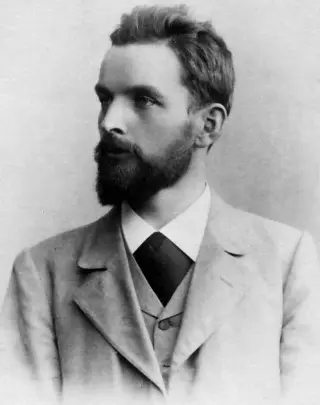
The Silvio Gesell Foundation promotes the economic theories of Silvio Gesell, advocating for a monetary and land-ownership reform that challenges the traditional functions of money and property. Founded to resurrect and disseminate Gesell’s vision of “free money” and “natural economic order,” the foundation works to make his proposals accessible worldwide.
Through educational initiatives—courses, translated publications, lectures—and an active online presence (newsletter, resources, community discussions), the Foundation aims to influence today’s monetary debates and support the emergence of alternative monetary systems based on social justice and economic resilience.
More information here
International
Komunitin is an open-source platform and app that allows local communities worldwide to create, manage, and exchange their own community currencies — and trade with other communities via a shared marketplace.
Each community defines its own governance and monetary rules (mutual-credit scheme, credit limits, currency issuance) according to its needs, offering an inclusive, decentralized alternative to conventional money.
By combining wallet functionalities, marketplace for goods/services, and cross-community exchange capabilities (enabled through a blockchain-based system), Komunitin fosters local economic resilience, mutual aid, and stronger social cooperation — beyond borders and formal financial systems.
Discover more about Komunitin here
Basel, Switzerland
Ecoloc is a non-profit think tank and community organisation dedicated to strengthening local economies by developing methods, tools and practices that support sustainable, ecological and socially coherent economic models. Based in Basel, Ecoloc works to make the value of local economies visible, tangible and measurable — helping communities, local businesses and citizens to build resilient and regenerative local economies.
Their work spans local economic activation, environmental sustainability, social cohesion and regional development — promoting sufficiency, shared resources, circular economy, and community-led governance.
Discover more about Ecoloc here
Netherlands
Money Maker is a board game that simulates banking, credit creation and financial cycles: each player becomes a banker, uses credit to invest, acquires companies, produces goods, and repays debts — or risks triggering a bank run. The game visualises how money, debt and credit operate in an economy, offering a concrete and playful way to understand monetary creation and systemic instability.
By transforming complex monetary dynamics into a shared game experience, Money Maker helps raise awareness on how banking and credit systems work — making monetary theory accessible to citizens, students, and communities worldwide.
Discover more about Money Maker here

Netherlands
LedgerLoops is a peer-to-peer obligation-clearing network that allows participants (businesses or communities) to settle invoices and receipts without relying on traditional money flows or cash liquidity. It uses a unique algorithm to detect payment loops and clear mutual debts — enabling more efficient trade and reducing the liquidity constraints and delays associated with traditional payment systems.
By eliminating the need for upfront cash or a central currency, LedgerLoops offers an alternative to conventional money, built on trust, cooperation, and network-based clearing.
More information here
Italy
RetiCS is a research- and activist-driven network based in Italy that supports and promotes alternative exchange systems, community currencies, mutual-credit schemes and solidarity-economy practices. Their work focuses on fostering cooperation, social cohesion and economic resilience through non-monetary or complementary exchange systems.
By combining research, training and collaboration with numerous local solidarity-economy actors (time-banks, community currencies, mutual-credit initiatives, social cooperatives), RetiCS aims to overcome fragmentation in alternative monetary practices and build a robust national — and international — network for ethical and sustainable exchange systems.
Discover more about RetiCS here

France
Mouvement SOL is a federation and experimental hub for citizen-led local currencies across France, bringing together around 40 complementary currency initiatives plus various alternative monetary experiments.
As a national association, SOL coordinates collective experience-sharing, supports the structuring and scaling-up of local currencies, advocates at institutional level, and helps digitalise community currencies.
By federating local initiatives, enabling coordination between territories, and promoting monetary pluralism as a lever for ecological, social and territorial resilience, SOL contributes to rethinking money as a tool for solidarity, local development and democratic economic governance.
Discover more about Mouvement SOL here

Africa
Grassroots Economics is a non-profit foundation founded in 2010 that empowers marginalized communities — especially in informal settlements and rural areas — to take control of their livelihoods and build resilient local economies through community-driven monetary systems.
Across more than 100 locations, Grassroots Economics has supported over 60 000 small businesses, schools, and community groups in using inclusive monetary tools to sustain trade, social services, and community-led development. grassrootseconomics.
By combining trust-based exchange, shared resources and digital innovation, Grassroots Economics shows how monetary diversity can become a lever for equity, resilience and social inclusion.
Discover more about Grassroots Economics here
United Kingdom
Mutual Credit Services Liquidity and clearing solutions for communities.
Clearing Offsetting debts at scale. Decentralisation No interest, no extraction. Interconnection Enabling large mutual credit webs.
Because MCS transforms mutual credit from concept into scalable, operational infrastructure.
Discover more here

Spain
Dinero Positivo is an initiative promoting positive and socially-oriented money in Spain.
Dinero Postivo as a tool for social good. Solidarity Emphasising cooperation over competition. Transformation, rethinking the role of money in society.
Because Dinero Positivo contributes to the cultural and conceptual shift needed to reimagine money as a collective and ethical tool.
More information here
Switzerland
Le Franc Paysan is a Swiss local currency dedicated to agriculture and food systems.
Short supply chains Supporting local farmers and producers. Food sovereignty, strengthening resilient agricultural systems. Territorial identity Connecting consumers and producers locally.
Because Le Franc Paysan illustrates how local currencies can directly support sustainable food systems and rural resilience.
Discover more about them here
United States of America
Hudson Valley Current is a local currency in New York State.
Community wealth Keeping value circulating locally. Fair exchange Supporting small businesses. Inspiration A strong narrative of rebuilding communities.
Because Hudson Valley Current shows how local currencies can meaningfully reshape regional economies and identities.
Discover more about Hudson Valley here
Belgium
Kommunity is an all-in-one platform designed to help organizations, networks, and movements build, manage, and grow engaged communities through events, memberships, and collaborative tools. By centralizing event organization, communication, and engagement, it enables communities to connect both online and locally, strengthen relationships, and activate collective action more effectively.
For MoDi Expertise, working with Kommunity is key because local and regional currencies depend on strong, connected communities to thrive. Platforms like Kommunity make it easier to mobilize citizens, coordinate events, and nurture the trust and participation that underpin resilient local economies and Monetary Diversity.
Discover here

Belgium
Zinne is the citizen-led local currency of the Brussels-Capital Region, designed to strengthen the local economy, support independent businesses, and foster social and environmental values through a circular, community-based financial system. Operating since 2019, it keeps wealth circulating within local networks of producers, merchants, and residents, while promoting short supply chains, social cohesion, and sustainable practices.
Collaborating with Zinne is essential because it represents a concrete, citizen-driven example of Monetary Diversity in action. Working with initiatives like Zinne helps MoDi strengthen real-world implementation of municipal and regional currencies, deepen community engagement, and scale resilient local economic models that can respond to ecological and economic crises.
More information here

Europe
MuntUit Social innovator in community currencies. Innovation Constant experimentation in monetary tools. Values-driven Social impact at the core of design. Inspiration Setting high standards in the field.
Because MuntUit represents excellence and boldness in rethinking how money can serve society.
Discover more about MuntUit here
Nederlands
United Economy Large Dutch network for a fair and local economy.
Scale Hundreds of companies and individuals connected. Collaboration Conscious consumption and shared initiatives. Leadership A decade of inspiration in CC ecosystems.
Because United Economy demonstrates how complementary currencies can scale through strong networks and shared values.
More information here
Ireland
EURenOmics is a European research consortium that brings together academic institutions, SMEs, and international partners to advance knowledge and innovation around rare kidney diseases. By combining large patient cohorts, cutting-edge genomic technologies, and shared data platforms, it develops new diagnostic tools, biomarkers, and therapeutic approaches aimed at improving patient care and medical understanding across Europe.
For MoDi Expertise, collaborating with EURenOmics reflects the importance of interdisciplinary partnerships and robust data ecosystems.
Discover more about them here

Spain
Ekhilur is a pioneering cooperative from the Basque Country that operates a local payment system without creating its own currency. Instead, it uses the euro within a digital, community-governed network that encourages money to circulate locally through cashback incentives, municipal participation, and cooperative decision-making. By optimizing how existing money flows—rather than replacing it—Ekhilur has already mobilized hundreds of users and businesses, generating strong local economic activity and reinforcing social ties.
This model demonstrates that resilient local economies can be built not only through new currencies but also through redesigned payment infrastructures—offering MoDi a powerful example to support municipalities and communities seeking practical, crisis-ready monetary solutions.
Sweden
Positiva Pengar is a Sweden‑based nonprofit think tank and citizens’ movement working for a more democratic, sustainable, and just monetary system. They bring together researchers, economists, activists, and engaged citizens to educate the public, drive debate, and advocate for monetary reforms that reduce inequality, strengthen financial stability, and ensure money creation serves society rather than speculative finance.
Their focus on democratic control of money creation and sustainable financial systems enriches MoDi’s efforts to promote Monetary Diversity and build resilient economic ecosystems across Europe and the world—linking grassroots currency innovation with broader debates on how money can better serve communities in times of crisis and transformation.
Discover here

International
BlockScience® is a systems engineering firm that operationalizes emerging technologies for high-reliability organizations. They work across healthcare, energy, finance, and government to integrate innovative solutions while maintaining reliable operations.
MoDi partners with BlockScience® to ensure that new monetary and technological solutions are reliable, effective, and operational — from local currencies to municipal tokens and mutual credit systems. Their hands-on, rigorous approach complements MoDi’s expertise in territorial monetary design.
Discover more at www.block.science

Brazil
MUDA – Outras Economias is a collaborative Brazilian network experimenting with alternative economies rooted in abundance, solidarity, culture, ecology and community care. Based in Rio de Janeiro, MUDA develops social currency systems, community exchange tools and regenerative economic practices that connect art, agroecology, education and technology.
Through its complementary currency “MUDA”, digital platforms and community-driven initiatives, the network supports local exchange, cultural production and socio-environmental action — fostering more inclusive and cooperative forms of economic participation. MUDA promotes a vision of money not as scarcity, but as a tool for connection, mutual support and collective transformation.
Discover more at: MUDA – Outras Economias

International
LocalScale is a framework for bioregional regeneration: a way for communities to organize economic life around the living realities of place, such as watersheds, ecosystems, local culture, food systems, and shared resources.
It is described as an “operating system for bioregions,” giving communities tools to map local assets, build circular economies, engage stakeholders, and plan for long-term sustainability.
Rather than scaling extraction, LocalScale aims to help each region become more resilient, self-reliant, and ecologically aligned.
More information here
International
The Regenerative Currency Federation´s core purpose is to foster the creation, interoperability, and governance of complementary currency systems that support ecological restoration, social resilience, and locally rooted prosperity.
The RCF is a collaborative network dedicated to enabling the exchange of value among communities that are actively engaged in regenerative economic practices.
Discover more here

International
The BioFi Project is a think-and-do-tank with a bold mission:
making sure every bioregion on Earth gets the financial infrastructure it needs to regenerate.
They support communities, Indigenous peoples and bioregional organizing teams — across North America and beyond — in designing and implementing Bioregional Financing Facilities (BFFs): a new kind of financial institution that connects capital flows directly to on-the-ground regenerators.
Their work is rooted in one core belief: finance must serve life, not extract from it.
BFFs act as connective tissue between large pools of capital and the mycelial network of local regenerative initiatives — enabling decentralized governance, systemic project portfolios, and a genuine transition to regenerative economies.
→ Discover The BioFi Project: biofi.earth
Spain
Clickoin develops a secure and transparent digital exchange infrastructure that enables real-time transactions between individuals, businesses, and organizations. Designed to simplify digital payments while ensuring trust and efficiency, its platform supports innovative economic ecosystems and modern payment solutions.
As a member of the MoDi network, Clickoin contributes valuable expertise in digital payment infrastructure, financial technology, and scalable monetary innovation. Their experience helps strengthen the network's capacity to bridge technological innovation with practical deployment of alternative monetary systems.
More information here

Germany
Gradido, developed in Germany, is an alternative monetary and economic model based on debt-free money creation, with a focus on individual wellbeing, community and the environment. Its approach explores how monetary design can support a more sustainable and resilient economic system.
Within the MoDi Network, Gradido brings a distinctive perspective on monetary system design, debt-free money and common-good-oriented economics, contributing to the diversity of approaches needed to rethink how money can serve societies and territories.
Discover more here

International
GoodDollar is a global blockchain-based initiative advancing Digital Universal Basic Income (UBI). By leveraging decentralized technologies, it seeks to expand financial inclusion and provide universal access to digital assets, empowering people who are underserved by traditional financial systems.
Within the MoDi network, GoodDollar contributes a global perspective on digital currencies, financial inclusion, and innovative monetary models. Its work enriches discussions around the future of money, social innovation, and the role of technology in building more inclusive and diverse monetary ecosystems.
www.gooddollar.org/